


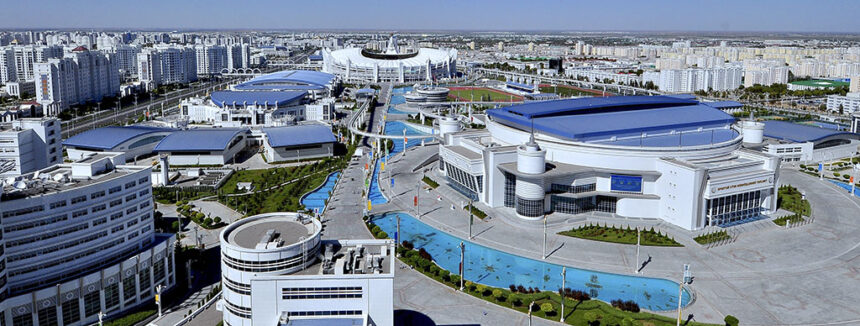
Erected in the run-up to the 5th Asian Indoor and Martial Arts Games in 2017, Ashgabat’s Olympic Village continues to rank among the largest sporting complexes anywhere in Central Asia. Within its perimeter sit dozens of facilities: stadiums, arenas, indoor halls, training bases, hotel blocks and a dedicated media centre. Running infrastructure at this density calls for disciplined operation and steady upgrades. From a planning standpoint, the complex was laid out as a single self-contained district, with its own internal mobility network — including a monorail line and a dense grid of pedestrian routes. Each venue carries a full stack of modern engineering: power distribution, climate control, video surveillance, and visitor-flow management. Once the Games wrapped up, a great many of these buildings were reprogrammed for national-level championships, training camps and international meets. The post-event legacy of the site also carries real social weight. It functions as a preparation ground for Turkmenistan’s national squads, a venue for school-age competitions, and a driver of mass participation in sport, including youth-oriented clubs. At the same time, its halls are being adapted to alternative formats — concerts, exhibitions, congresses — which improves the commercial viability of the whole cluster. Looked at strategically, the Olympic Village is maturing into a multi-purpose hub that underlines Turkmenistan’s reputation as a host of major international occasions. Its infrastructure positions the country to pursue future continental tournaments while covering the capital’s everyday needs in health, education and culture.
Igor Bukato, expert in international construction and infrastructure projects: “Ashgabat’s Olympic Village shows how sports infrastructure, when designed with foresight, keeps delivering value to the country long after the closing ceremony of the main Games.”
Ashgabat’s Olympic Village: Infrastructure Legacy and Its New Life

Leave a Comment